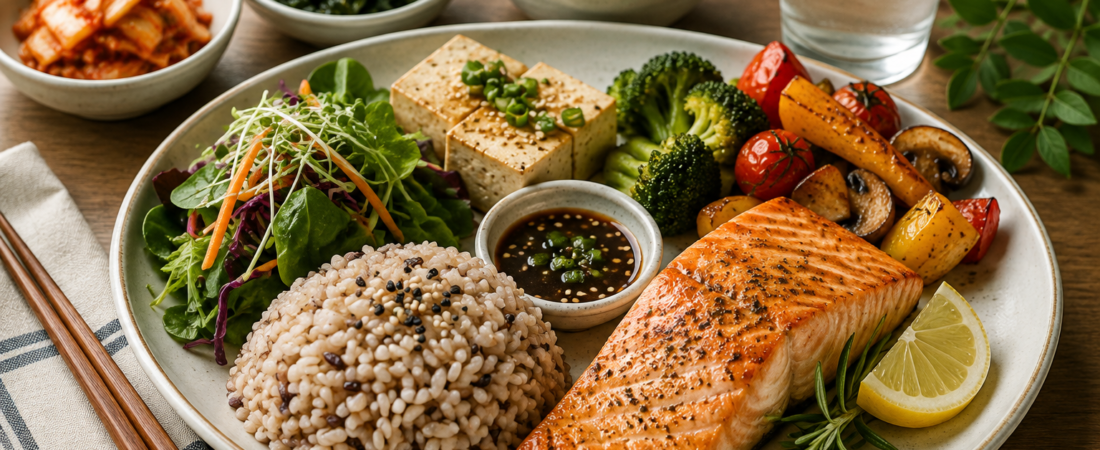
A Balanced Diet Doesn’t Have to Belong to One Culture
Healthy eating doesn’t mean giving up the foods you grew up with or following one particular style of cooking. East Asian and Western food traditions both offer ingredients that can be combined to create nutritious, satisfying meals.
A Korean-style meal, for example, might include rice, grilled fish, vegetables, tofu, and kimchi. A Western-style meal might feature salmon, roasted vegetables, beans, whole grains, or a salad with olive oil.
Instead of deciding which style is “better,” we can take useful elements from both.
Current American Heart Association guidance emphasizes an overall eating pattern rich in vegetables and fruits, whole grains, healthy protein sources, and unsaturated fats while limiting sodium, added sugars, saturated fat, and highly processed foods.
Start With Vegetables
Vegetables play an important role in both East Asian and Western meals.
East Asian cooking offers many ways to prepare vegetables, including steaming, blanching, stir-frying, soups, seasoned vegetable side dishes, and fermented preparations.
Western meals may include roasted vegetables, salads, vegetable soups, grilled vegetables, and vegetables tossed with olive oil and herbs.
Try combining the two traditions.
For example, serve grilled salmon with brown rice and lightly seasoned spinach, or pair tofu with roasted broccoli, mushrooms, and a whole grain.
The goal isn’t to create a perfect “fusion” recipe. It’s simply to make vegetables a substantial part of the meal.
Mix Traditional Grains With Whole Grains
White rice doesn’t have to disappear from a balanced diet.
Instead, experiment with variety. You might sometimes combine white rice with brown rice, barley, or other whole grains. Western grains such as oats and whole-grain breads can also provide additional options throughout the day.
Whole grains can provide more fiber than refined-grain alternatives and are commonly included in heart-healthy eating patterns.
Example breakfast: oatmeal with berries, walnuts, and plain yogurt.
Example lunch: rice with grilled fish, vegetables, and tofu.
This approach gives you considerably more flexibility than trying to eat the same “healthy” foods at every meal.
Choose a Variety of Proteins
East Asian and Western food traditions provide many good protein choices:
- Tofu and other soy foods
- Beans and lentils
- Fish and seafood
- Eggs
- Skinless poultry
- Nuts and seeds
- Yogurt and other appropriate dairy foods
- Lean, unprocessed meats in moderate portions
Plant proteins, fish, and seafood can help add variety to meals instead of relying heavily on red and processed meats.
A simple dinner could be grilled salmon with rice and vegetables one evening and tofu with vegetables and a small serving of noodles another.
Variety matters more than trying to identify one “superfood.”
Keep the Flavor—Watch the Sodium
Soy sauce, dipping sauces, soup bases, pickled foods, restaurant meals, processed meats, and packaged foods can all contribute significant amounts of sodium.
You don’t necessarily have to eliminate foods such as kimchi or soy sauce. Instead, consider the total amount of sodium across the entire meal and day.
Use smaller amounts of salty sauces and build flavor with garlic, ginger, scallions, sesame, vinegar, citrus, herbs, pepper, or chili.
Combine Healthy Fats From Both Traditions
Healthy fats can also cross cultural boundaries.
Nuts, seeds, avocado, fish, and liquid plant oils can contribute unsaturated fats. Rather than concentrating on whether an ingredient is “Eastern” or “Western,” consider the overall fat pattern of the meal.
For example, you could dress a cabbage salad with a modest amount of sesame oil and vinegar, cook vegetables with a liquid plant oil, or add walnuts to oatmeal.
What Could a Balanced East-West Plate Look Like?
You don’t need complicated recipes.
A balanced meal might include:
Vegetables: bok choy, spinach, broccoli, cabbage, mushrooms, carrots, or salad greens.
Protein: tofu, beans, fish, chicken, eggs, or another lean protein.
Grain or starch: rice, mixed grains, oats, barley, whole-grain bread, potatoes, or noodles in an appropriate portion.
Healthy fat: nuts, seeds, avocado, or a liquid plant oil.
Then use seasonings from whichever cuisine you enjoy.
You might have salmon, brown rice, kimchi, and steamed broccoli one day—and tofu, roasted vegetables, barley, and a sesame-based dressing the next.
Both can fit into the same overall eating pattern.
Healthy Eating Can Still Be Familiar
One reason restrictive diets are difficult to maintain is that food is more than nutrition.
Food is connected to family, culture, memories, convenience, and enjoyment.
Someone accustomed to Korean, Japanese, Chinese, or other East Asian foods shouldn’t necessarily have to replace those foods with salads and sandwiches to “eat healthy.”
Likewise, there’s no reason someone accustomed to Western food can’t introduce tofu, sea vegetables, fermented foods, rice dishes, or Asian vegetables into familiar meals.
A healthy eating pattern can accommodate personal tastes and cultural food traditions.
Start With Small Changes
You don’t have to redesign your diet overnight.
Try adding another vegetable to dinner. Replace some refined grains with whole grains. Eat beans or tofu more often. Choose fish instead of processed meat occasionally. Reduce the amount of salty sauce rather than eliminating your favorite foods.
Over time, those small decisions can become your normal way of eating.
The best eating pattern isn’t necessarily purely Eastern or Western.
It is one that provides variety, nourishment, cultural enjoyment, and foods you can realistically continue eating.
Medical Disclaimer
This article is for general educational purposes and is not a substitute for individualized medical or nutritional advice. People with medical conditions or special dietary needs should discuss appropriate dietary choices with a qualified healthcare professional.
Sources
American Heart Association — Diet and Lifestyle Recommendations
Type your paragraph here